


Istanbul: What to See, Where to Stay and How to Get Around
Hagia Sophia, Topkapi, the Grand Bazaar, Galata and the Bosphorus: a three-day route, convenient districts, getting in from the two airports and entry rules for citizens of different countries.
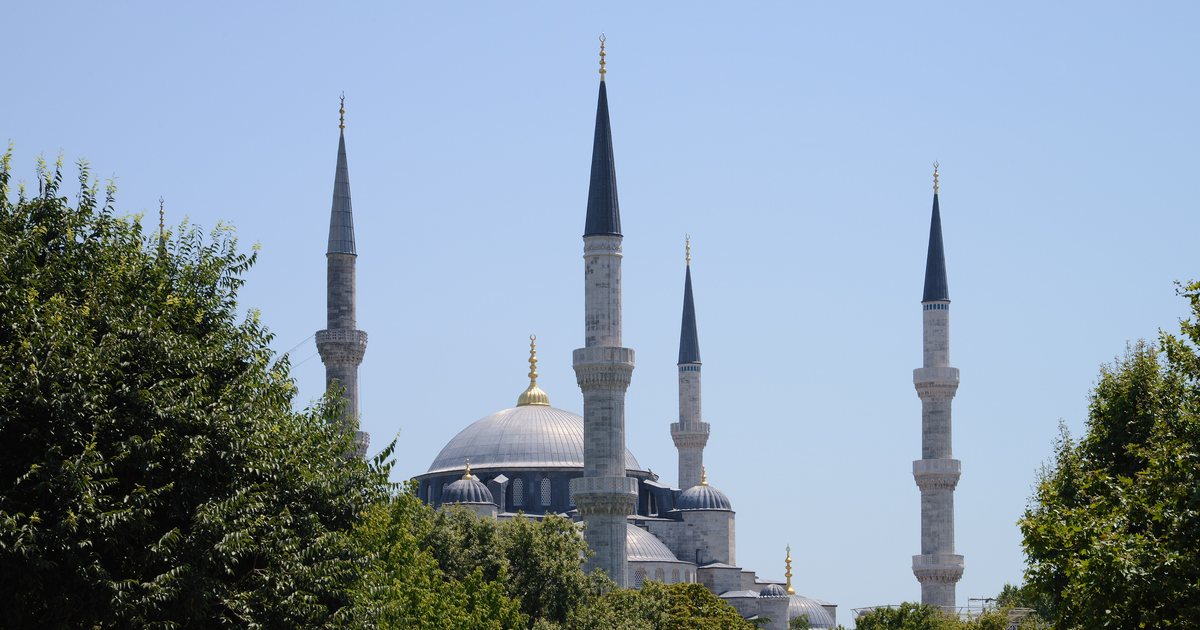
Istanbul is a city on two continents: the historic center with Hagia Sophia, the Blue Mosque and Topkapi Palace is in Europe, while across the Bosphorus, twenty minutes by ferry, lies Asian Kadıköy with its markets and waterfronts. Below are the main sights, a three-day route, convenient districts to stay in, how to get in from the two airports and the entry rules for citizens of different countries.
Entry rules are based on the official page of the Turkish Ministry of Foreign Affairs as of November 16, 2026. Because of inflation, ticket and transport prices in Turkey change several times a year, so we link to the official websites where you can see them on the day of your trip.
The trip in brief
- Visa. Citizens of Kazakhstan, Uzbekistan and Kyrgyzstan do not need a visa for up to 90 days (for Kazakhstan and Uzbekistan — no more than 90 days in any 180), Russia — up to 60 days for tourist and business trips, Belarus — up to 30 days per trip and no more than 90 days a year.
- Time. UTC+3 all year round with no clock changes: the same as Moscow and two hours behind Kazakhstan.
- Money. The Turkish lira. Cards are accepted almost everywhere; cash is needed at markets and in small cafés.
- Transport. The Istanbulkart card — for the metro, trams, buses and city ferries.
- When to go. April — June and September — November: warm, but without the summer heat. In April tulips bloom in the parks.
- How many days. Three days for the highlights, five to add the Asian shore, the Princes' Islands and the Bosphorus without rushing.
Sultanahmet: the main sights in one day
The historic peninsula is the oldest part of the city. The main sights are a few minutes' walk from each other, and the easiest way to get here is the T1 tram to the Sultanahmet stop.
- Hagia Sophia. A 6th-century cathedral, a mosque again since 2020. Worshippers enter free of charge, while tourists buy a ticket to the upper gallery, from which the whole dome is visible. Access is restricted during prayers.
- The Blue Mosque (Sultan Ahmed Mosque). Entry is free except at prayer times. Inside are more than twenty thousand tiles, which gave the mosque its name.
- Topkapi Palace. The residence of the sultans for almost four hundred years: courtyards, the harem, the treasury, views of the Bosphorus. Admission is paid, and the palace is closed on Tuesdays.
- The Basilica Cistern. A 6th-century underground reservoir with hundreds of columns and two Medusa heads at their bases.
- The Hippodrome. A square on the site of the Byzantine hippodrome, with the Egyptian obelisk and the Serpent Column.
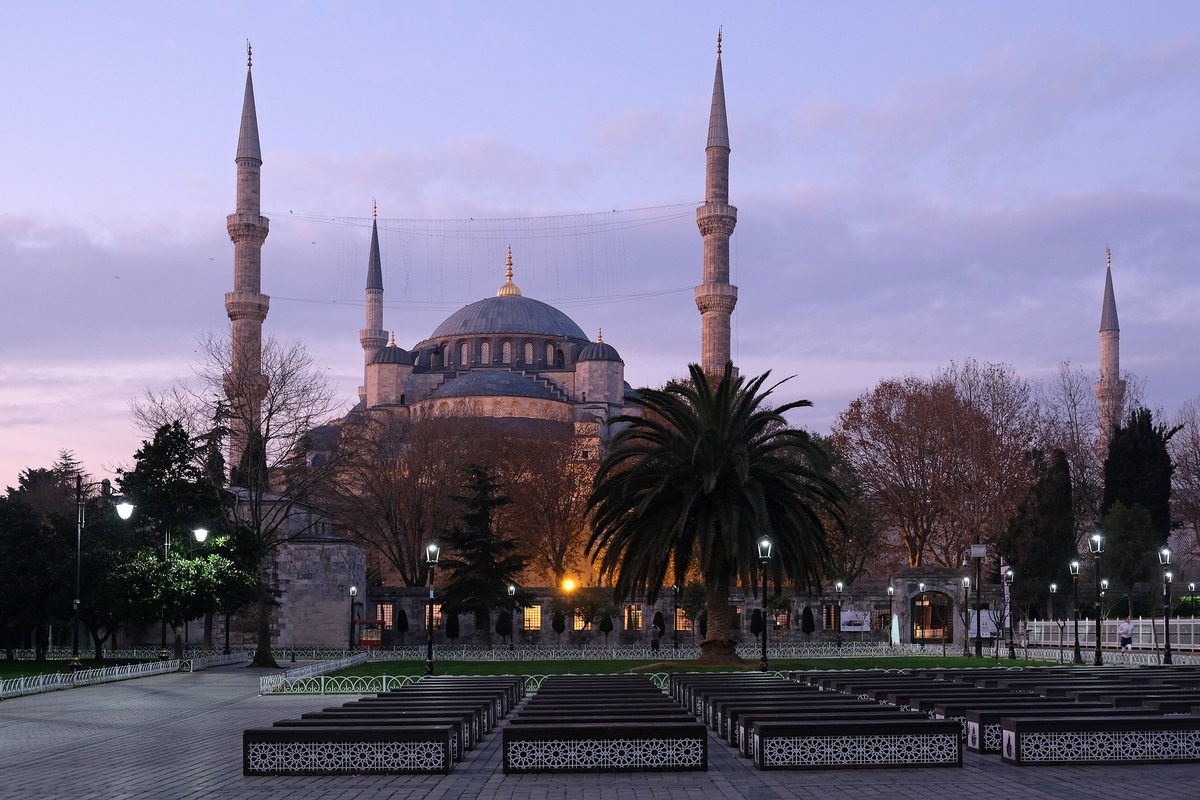
Mosques are entered without shoes; women need a headscarf, and shoulders and knees should be covered — wraps are usually handed out at the entrance. Tickets and opening hours of the Turkish Ministry of Culture museums are on muze.gov.tr, which also sells the Museum Pass Istanbul.
Bazaars: the Grand Bazaar and the Egyptian Bazaar
The Grand Bazaar (Kapalı Çarşı) is one of the oldest covered markets in the world: several thousand shops under stone vaults — carpets, ceramics, lamps, jewellery. It is closed on Sundays. The Egyptian (Spice) Bazaar by the Eminönü pier sells spices, tea, dried fruit and Turkish delight; it is also a convenient place to catch a ferry.
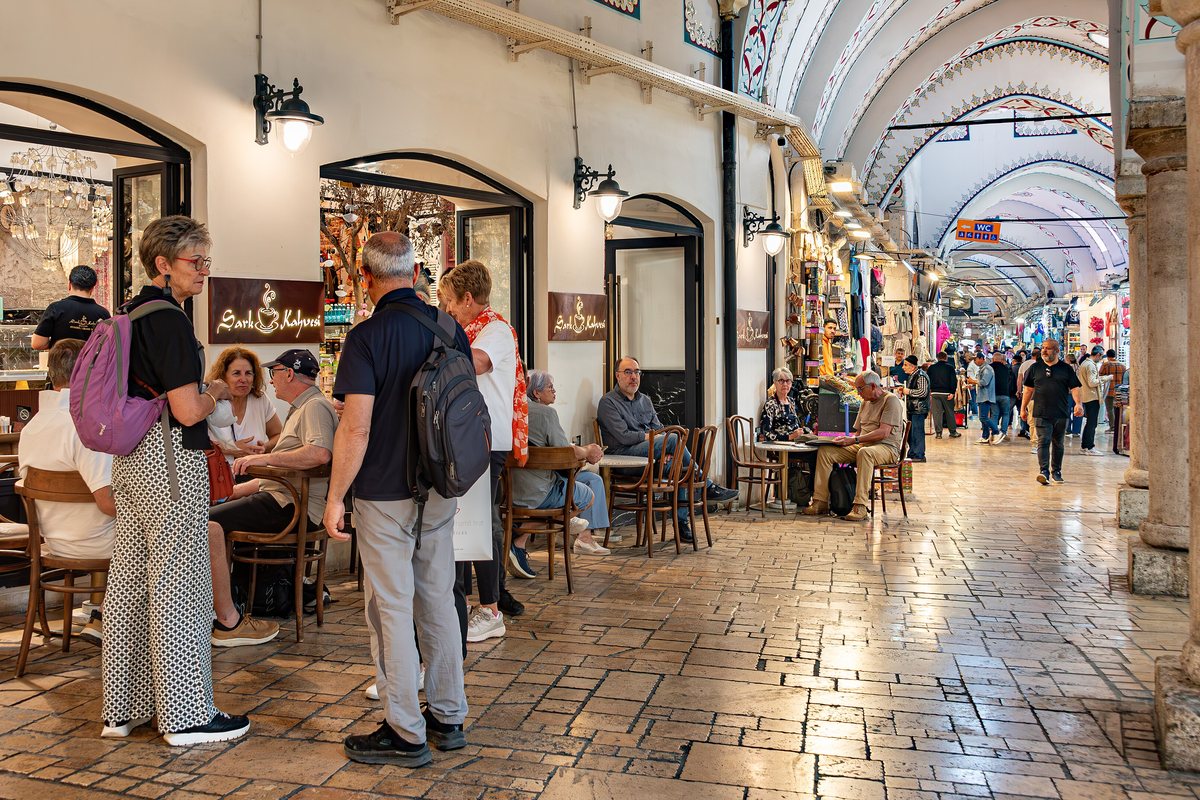
Bargaining is customary at the bazaars, and it is best to agree on the price before buying. Nearby is the Süleymaniye Mosque, one of the most beautiful in the city: entry is free, and its garden offers a view of the Golden Horn.
Galata, Beyoğlu and İstiklal
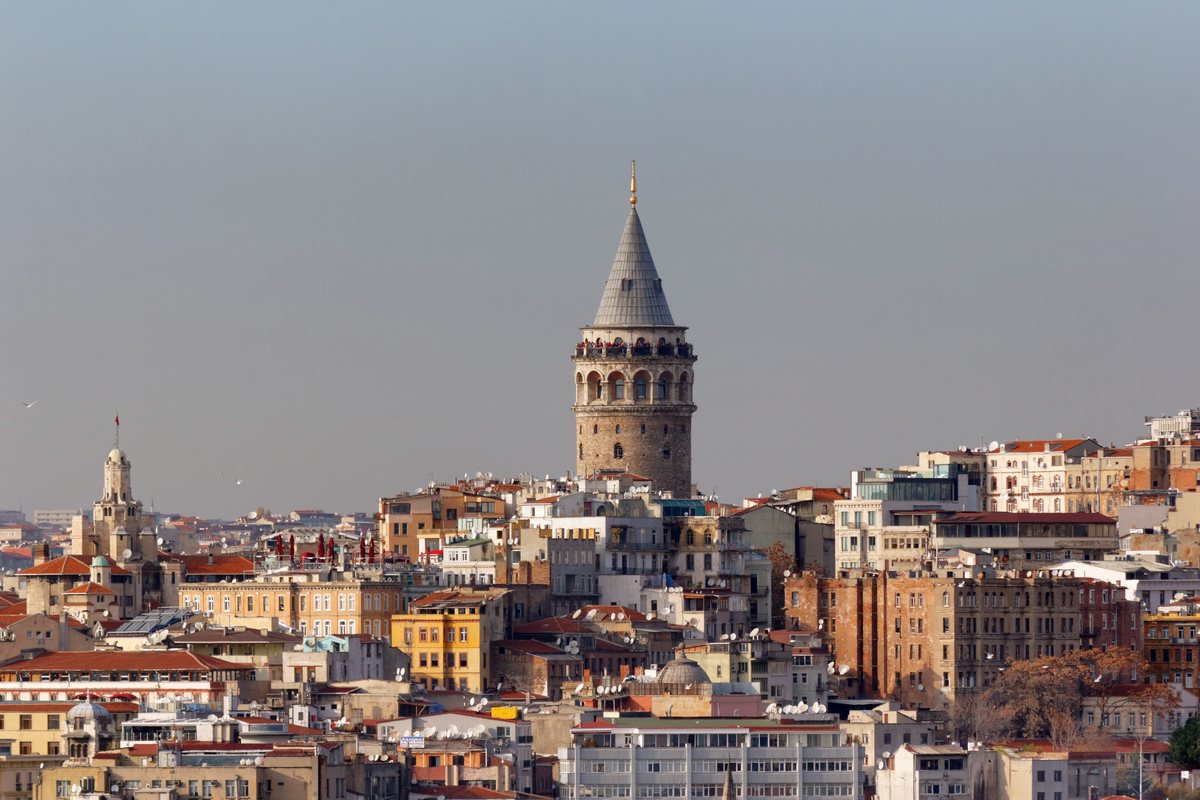
Across the Galata Bridge — past the anglers with their fishing rods — you can walk to Karaköy and climb up to the Galata Tower, a medieval Genoese tower with a panoramic viewing gallery. Further on is İstiklal Avenue, a pedestrian street running to Taksim Square, with an old red tram. In the evening it is at its busiest, full of people, cafés and street musicians.
On the shore of the Bosphorus, in Beşiktaş, stands Dolmabahçe Palace, the European-style residence of the last sultans. Its halls can be seen with a ticket, and the palace is closed on Mondays.
The Bosphorus by ferry
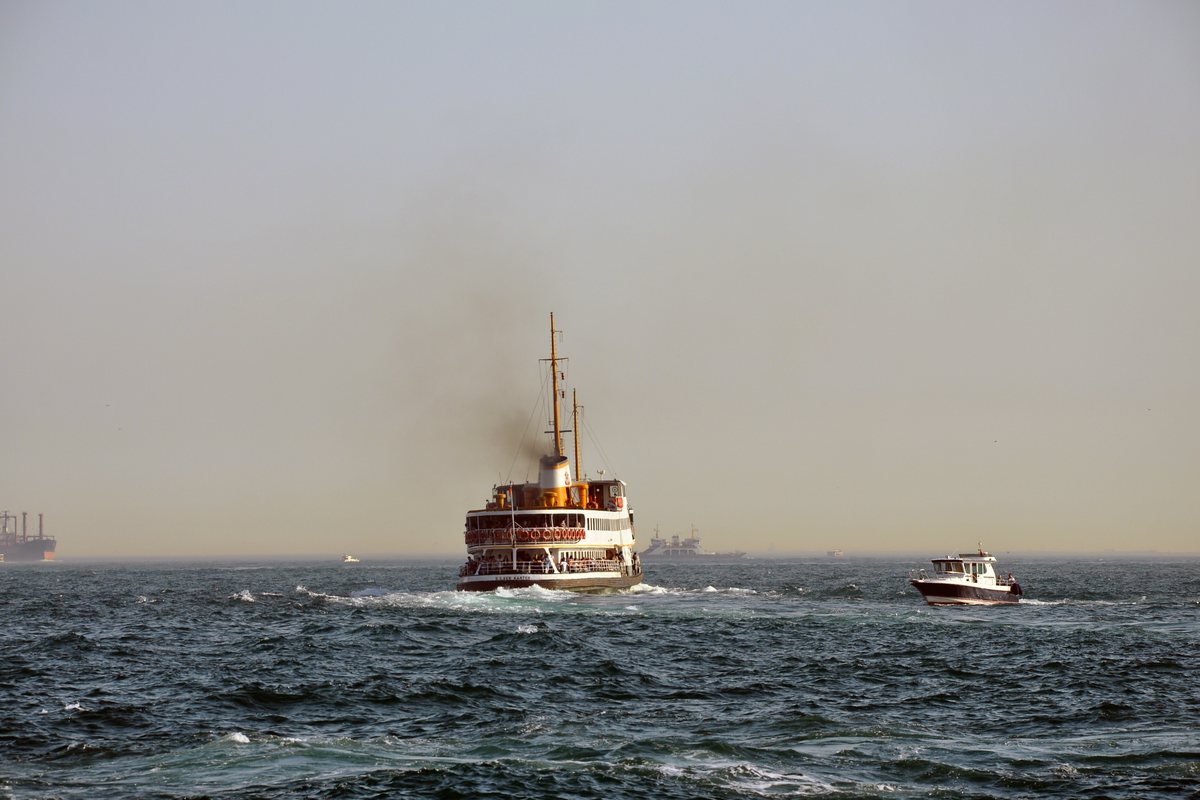
The simplest way to see the Bosphorus is to take an ordinary city ferry with an Istanbulkart. The short Eminönü — Kadıköy or Beşiktaş — Üsküdar crossing takes about twenty minutes: from the deck you can see the mosques of the historic center, palaces and bridges. For a long cruise along the whole strait there are tourist sailings by the city company Şehir Hatları.
 Created by AI
The Asian shore, Balat and the Princes' Islands
- Kadıköy and Moda. A market with fish and spices, coffee houses, a waterfront with sunsets over the European side. This is where Istanbulites themselves live, and café prices are usually lower than in Sultanahmet.
- Üsküdar. Old mosques and a waterfront with a view of the Maiden's Tower.
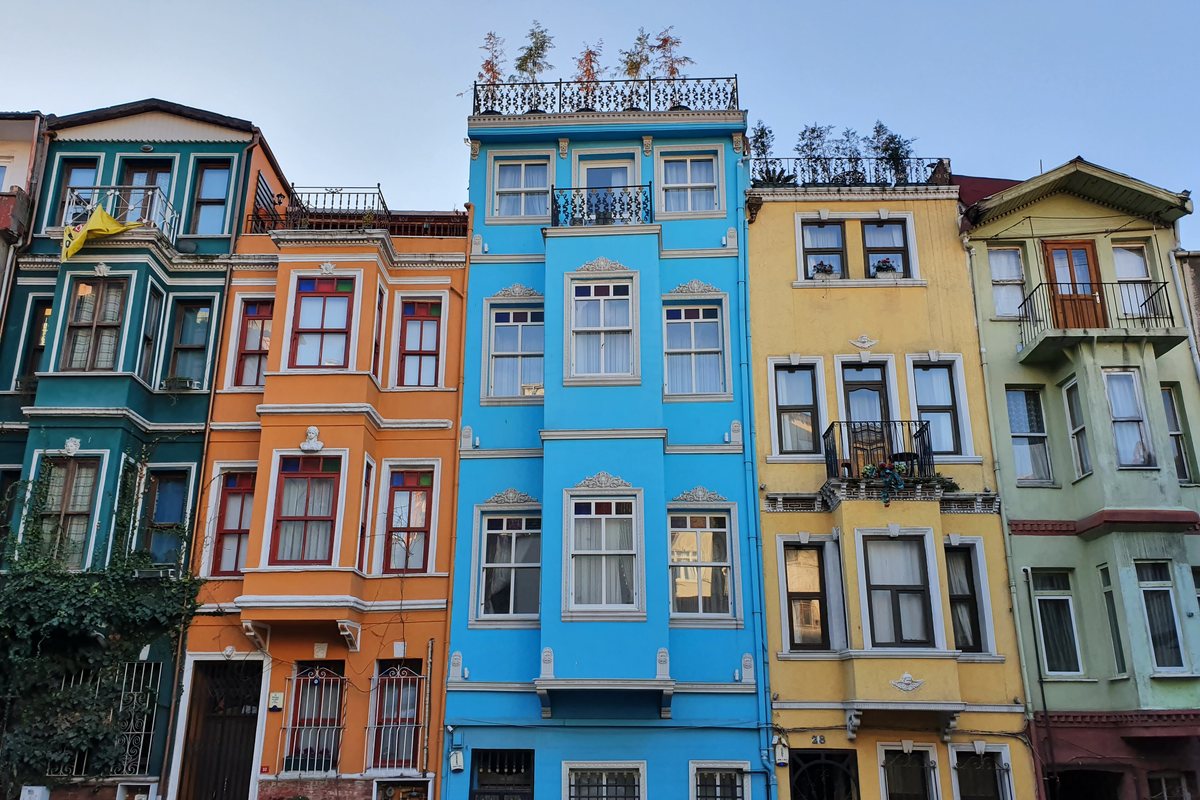
- Balat and Fener. Colourful houses on the slopes by the Golden Horn, a red-brick Greek school and small coffee houses — a favourite spot for photographers.
- The Princes' Islands. The ferry takes about an hour and a half. There are no ordinary cars on the main island, Büyükada: people walk, cycle or ride electric carts.
 Created by AI
A three-day route
| Day | What to do |
|---|---|
| 1 | Hagia Sophia, the Blue Mosque, the Hippodrome, the Basilica Cistern, Topkapi Palace (except Tuesday), in the evening — a walk around Sultanahmet |
| 2 | The Grand Bazaar (except Sunday), the Süleymaniye Mosque, the Egyptian Bazaar, the Galata Bridge, the Galata Tower, an evening on İstiklal |
| 3 | Dolmabahçe (except Monday), a ferry to Üsküdar or Kadıköy, sunset on the Moda waterfront |
If you have a fourth and fifth day, add Balat and Fener, the Princes' Islands and a long cruise along the Bosphorus.
Where to stay: Istanbul districts
| District | Who it suits | What to consider |
|---|---|---|
| Sultanahmet | First trip, all the main sights within walking distance | Quieter in the evening, cafés aimed at tourists |
| Sirkeci and Eminönü | Easy to get around: tram, Marmaray, ferries | Noisy and crowded during the day |
| Karaköy and Galata | Restaurants, coffee houses, evening walks | Steep streets with stairs |
| Beyoğlu and Taksim | Nightlife, metro and buses to the airports | The noisiest district |
| Beşiktaş and Nişantaşı | Waterfront, shops, business meetings | To Sultanahmet — with a change |
| Kadıköy | Living like a local, a longer stay | To the center — by ferry, about twenty minutes |
For a business trip, Şişli, Levent and Maslak are more convenient: they have business centers and offices, and the M2 metro runs both to the historic center and to the transfer to the M11 airport line.
How to get in from the airport
- Istanbul Airport (IST) is on the European side, north of the city. The M11 metro runs to Kağıthane and Gayrettepe stations, with transfers to the M7 and M2, and Havaist buses go to various districts, including Taksim and Aksaray (from Aksaray to Sultanahmet it is a few stops on the T1 tram). Routes and fares are on hava.ist.
- Sabiha Gökçen Airport (SAW) is on the Asian side. The M4 metro runs to Kadıköy, from where ferries go to Eminönü and Karaköy.
- Taxis run on the meter; it is easier to order one through an app, where the price is shown in advance.
Transport and the Istanbulkart
The Istanbulkart is sold and topped up at machines at metro stations and piers. One card can pay for the whole family — you tap it once for each person. The lines most useful to visitors are the T1 tram (Kabataş — Sultanahmet — Aksaray), the M2 metro (Taksim — Şişli — Levent), the Marmaray train under the Bosphorus and the city ferries.
What to try
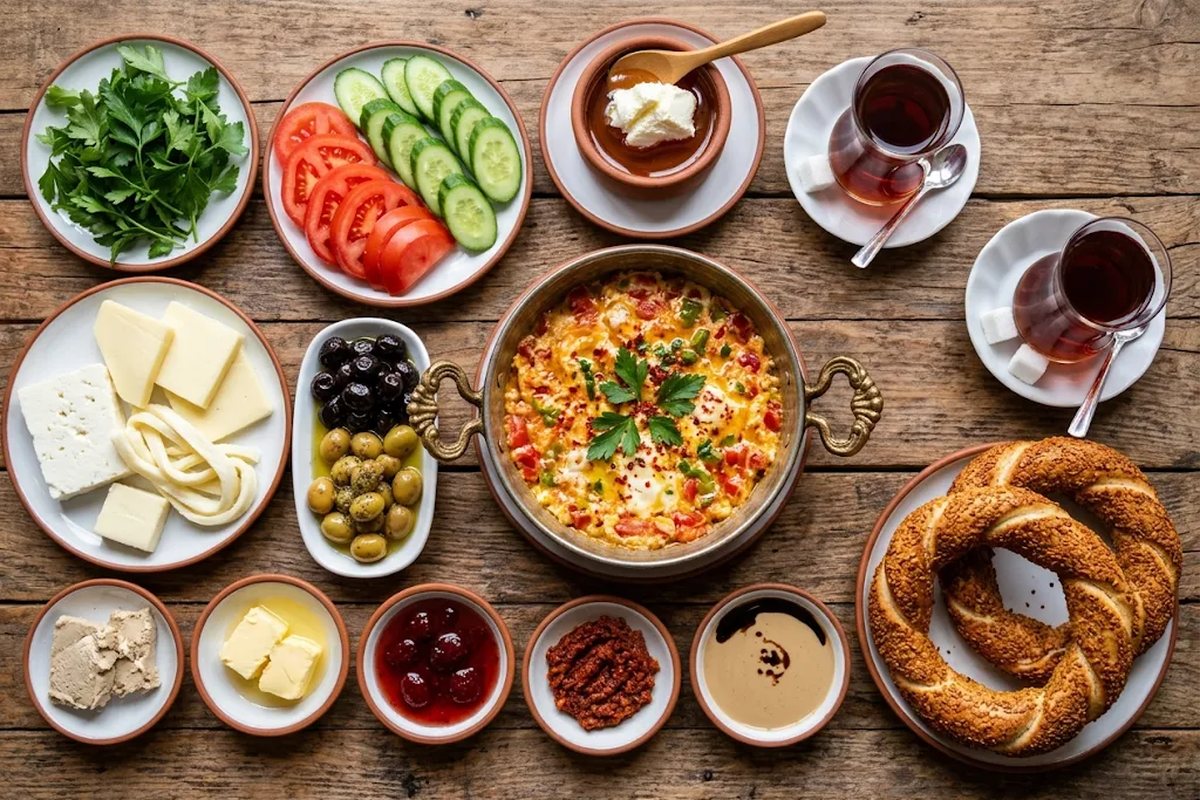 Created by AI
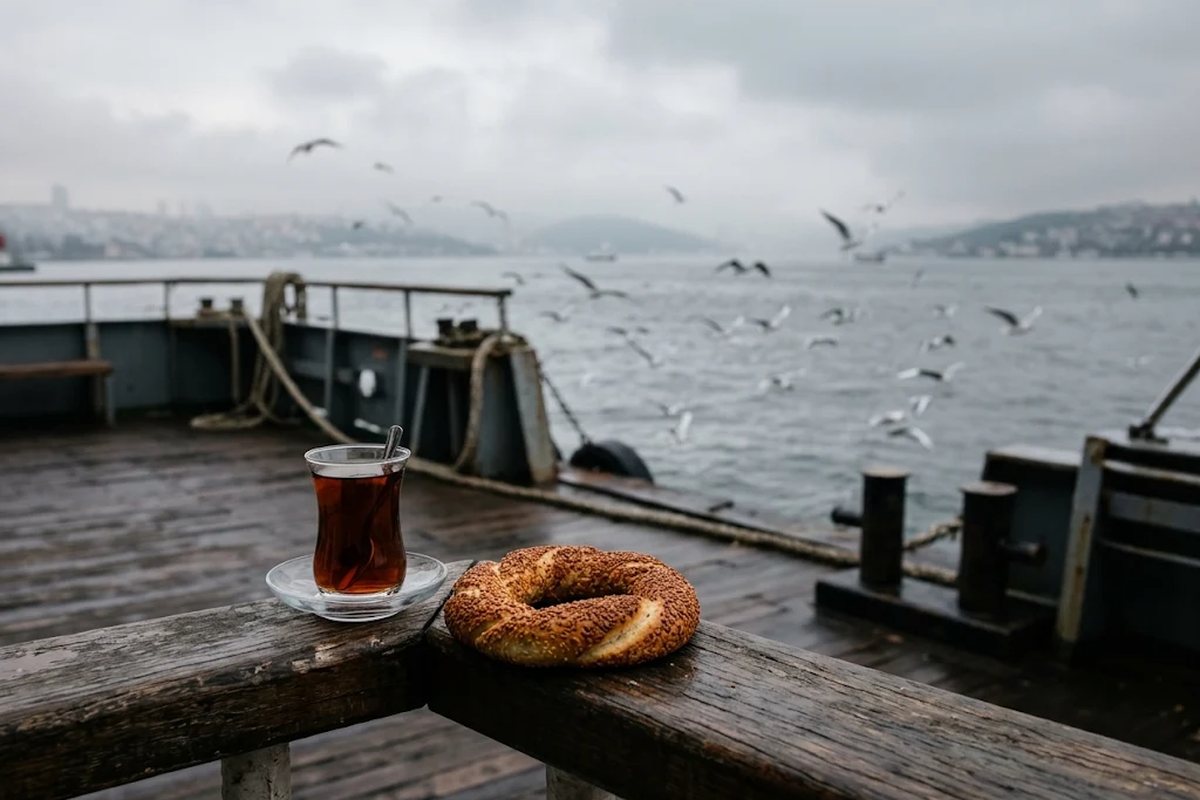
The kahvaltı Turkish breakfast, balık ekmek — fish in bread at the Eminönü pier, döner, künefe, Turkish delight and, of course, tea in tulip-shaped glasses, poured everywhere and in quantity. Tap water in Istanbul is not usually drunk — people buy bottled water.
Good to know
- Mobile connection. Tourist SIM cards are sold at the airport and in operator shops on presentation of a passport. A phone brought from abroad works with a Turkish SIM card for a limited time, after which it has to be registered — for a short trip, an eSIM or roaming is simpler.
- Tips. In cafés and restaurants people usually leave 5–10 % if service is not included in the bill.
- Beware of "helpers". On the squares of Sultanahmet and Taksim people approach tourists with invitations to shops and bars — politely decline.
From Istanbul you can fly to Cappadocia in 1 hour 15 minutes — read about balloons at dawn, valleys and underground cities in "Cappadocia".
Questions and answers
Do you need a visa for Istanbul?
Citizens of Kazakhstan, Uzbekistan and Kyrgyzstan do not, for up to 90 days (for Kazakhstan and Uzbekistan — no more than 90 days in any 180). Citizens of Russia do not, for up to 60 days for tourist and business trips; Belarus — up to 30 days per trip. The rules are on the website of the Turkish Ministry of Foreign Affairs.
How many days do you need in Istanbul?
Three days for the main sights of the historic center, Galata and the Bosphorus. Five days to add the Asian shore, Balat and the Princes' Islands without rushing.
Which district of Istanbul is best to stay in?
On a first trip — Sultanahmet or Sirkeci: the main sights are within walking distance. For evening walks and restaurants — Karaköy and Galata, for living like a local — Kadıköy, for a business trip — Şişli, Levent and Maslak.
How do you get from Istanbul airport to the center?
From Istanbul Airport (IST) — on the M11 metro with a change to the M2, or on a Havaist bus to Taksim and Aksaray. From Sabiha Gökçen (SAW) — on the M4 metro to Kadıköy and then by ferry.
When are Istanbul's main museums closed?
Topkapi Palace is closed on Tuesdays, Dolmabahçe Palace on Mondays, and the Grand Bazaar does not open on Sundays. Mosques are closed to tourists during prayers.
The text, translation and images for this article were prepared with the help of artificial intelligence. AI can make mistakes — check important figures, dates and requirements against official sources.
Verified business hotels at closed corporate rates, with the invoice, act and e-invoice for your company — all in one account.
 Photo: xiquinhosilva
16 November 2026Baku: What to See, Where to Stay and How to Enter
 Photo: Andrew Behesnilian
16 November 2026Yerevan: What to See in the City and Around
 Photo: Struppig taucher
16 November 2026Paris: What to See in Four Days
 Photo: Debashritaiitmandi
16 November 2026Rome: What to See in Four Days
 Photo: Bgag
17 November 2026Tashkent: What to See and How to Get There from Kazakhstan
 Photo: Jpbowen
16 November 2026Dubai: What to See, Where to Stay and What to Know
 Photo: Esginmurat
17 November 2026A Holiday in Antalya: Resorts, the Season and the Visa
 Photo: Velatrix
17 November 2026Beijing: What to See in Four Days
 Photo: Basile Morin
17 November 2026Seoul: What to See in Four Days
 Photo: Emrahuygun
18 November 2026Cappadocia: What to See and How to Get There
 Photo: Ninara / TSP
18 November 2026Bangkok: What to Know Before You Go
 Photo: Thomas Quine
16 November 2026Barcelona: What to See in Four Days
All articles
Business trips, documents and travel