


Paris: What to See in Four Days
The Eiffel Tower, the Louvre, Notre-Dame after its restoration, Montmartre and Versailles: a four-day route, arrondissements to stay in, getting in from the airport and the entry rules.
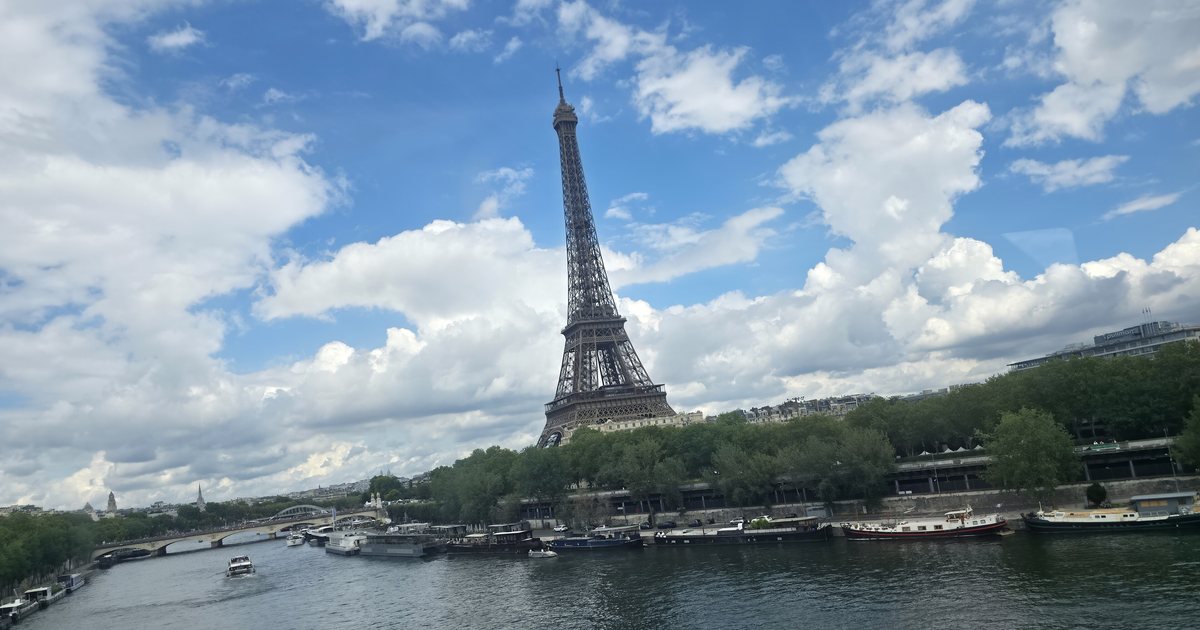
Paris is a city you want to explore on foot: the Seine with its bridges, boulevards, cafés with tables on the pavement and museums that a week would not be enough for. Below are the main sights, a four-day route, districts to stay in, getting in from the airport and the entry rules.
Entry rules are based on official European Union websites as of November 16, 2026.
The trip in brief
- Visa. France is in the Schengen Area. Citizens of Kazakhstan, Russia, Uzbekistan, Kyrgyzstan, Belarus, Armenia and Azerbaijan need a Schengen visa. Applications go to the French visa center; the official portal is France-Visas.
- How long you can stay. On a short-stay visa — up to 90 days in any 180, counting all Schengen countries together.
- The border. The electronic EES system operates at Schengen entry points: on your first crossing your face is photographed and, as a rule, your fingerprints are scanned, and passports are no longer stamped.
- Time. UTC+1 in winter, UTC+2 in summer: four hours behind Kazakhstan (three in summer) and two hours behind Moscow (one in summer).
- Money. The euro. Cards are accepted almost everywhere.
- When to go. April — June and September — October. July and August are the busiest, and December brings Christmas lights and markets.
The Eiffel Tower and the Seine
The tower was built for the 1889 World's Fair and is now 330 metres tall. You can go up by lift or walk up the stairs to the second floor; tickets are best bought in advance on the official website. The best views of the tower itself are from the Trocadéro and the Champ de Mars. To see the city from the water, take a sightseeing boat on the Seine: in an hour it passes the Louvre, Notre-Dame and a dozen bridges.
The Louvre, the Tuileries and the Champs-Élysées
- The Louvre is the most visited museum in the world: the Mona Lisa, the Venus de Milo, the Winged Victory of Samothrace. Entry is by timed slot, booked on the official website. Closed on Tuesdays.
- The Tuileries Garden runs from the Louvre to the Place de la Concorde, with ponds and chairs you can move around.
- The Champs-Élysées is the city's main avenue, leading to the Arc de Triomphe. You climb stairs to its roof, from where you can see 12 avenues radiating from the square like a star.
- The Musée d'Orsay — the Impressionists: Monet, Renoir, Degas, Van Gogh — in a former railway station. Closed on Mondays.
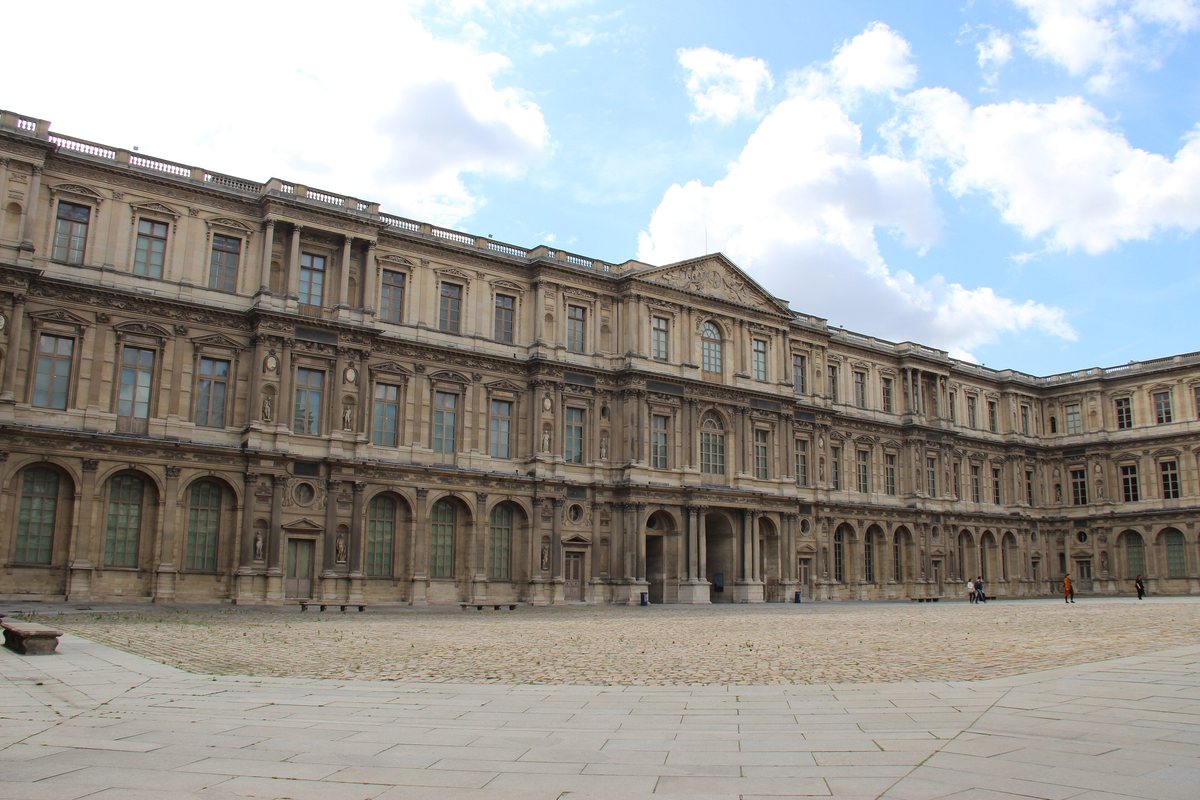
 Created by AI
Île de la Cité, Notre-Dame and the Latin Quarter
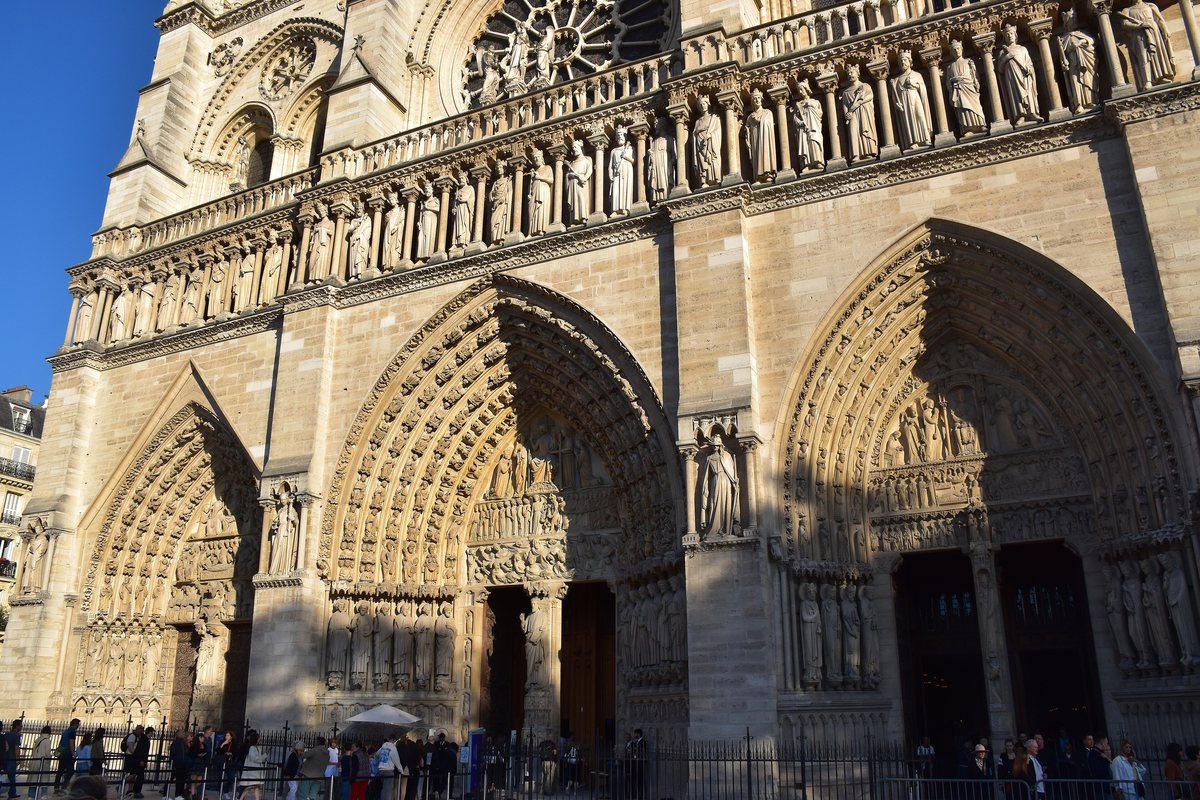
The city began on the Île de la Cité in the middle of the Seine. Here stands Notre-Dame Cathedral: after the 2019 fire it was restored and reopened in December 2024, and entry is free. Five minutes from the cathedral is Sainte-Chapelle, a 13th-century chapel whose walls are almost entirely replaced by stained glass. Across the bridge is the Latin Quarter with the Sorbonne, the Panthéon and the Luxembourg Gardens, and on the other bank is the Marais: old mansions, galleries, shops and the Place des Vosges of 1612, the oldest planned square in Paris.
Montmartre
The hill in the north of the city is the highest point in Paris. At the top is the white Sacré-Cœur basilica, with a view over the whole city. Nearby are the Place du Tertre with its artists, winding lanes, a vineyard and the Moulin Rouge cabaret at the foot of the hill. You can go up by the stairs or by the funicular, on an ordinary metro ticket.
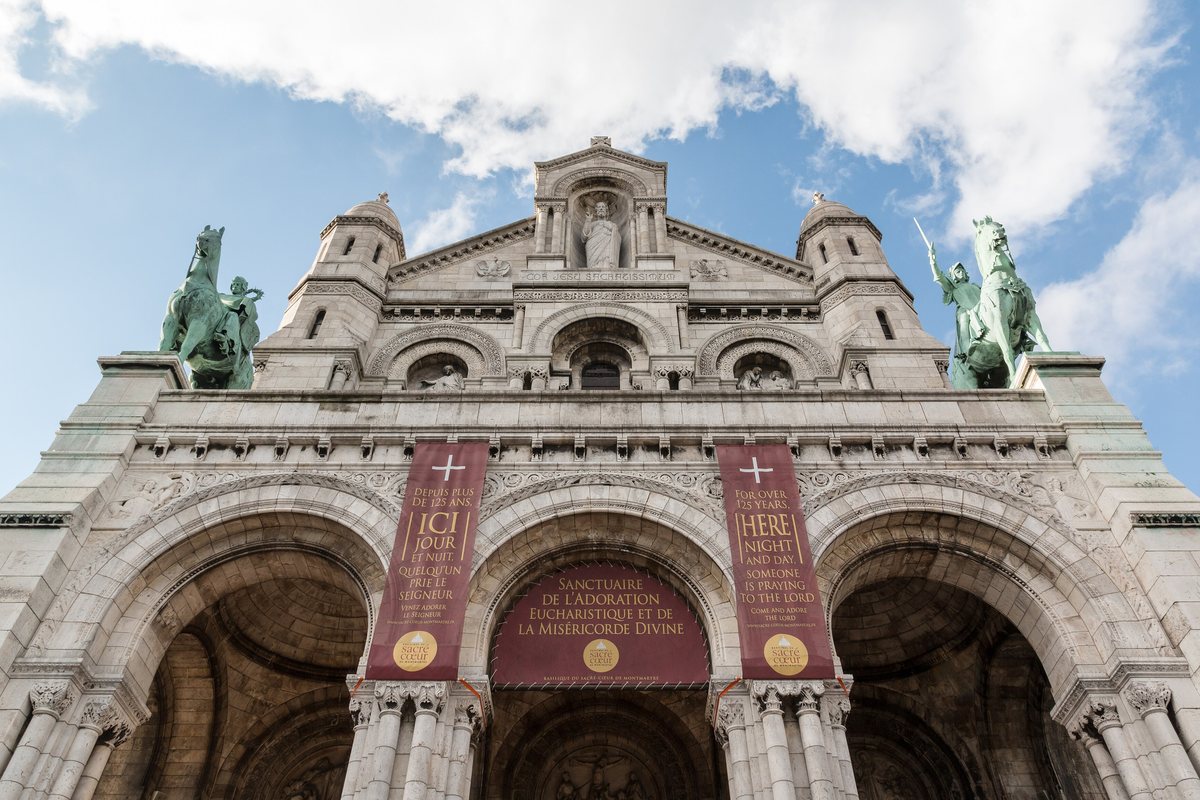
 Created by AI
Versailles: a day trip
The palace of Louis XIV, with the Hall of Mirrors and a vast park, is 20 km from Paris. The easiest way there is the RER C suburban train to Versailles Château Rive Gauche, a ten-minute walk from the palace. The palace is closed on Mondays, but the park is open that day too. Set aside a whole day for Versailles — the park alone takes hours to explore.
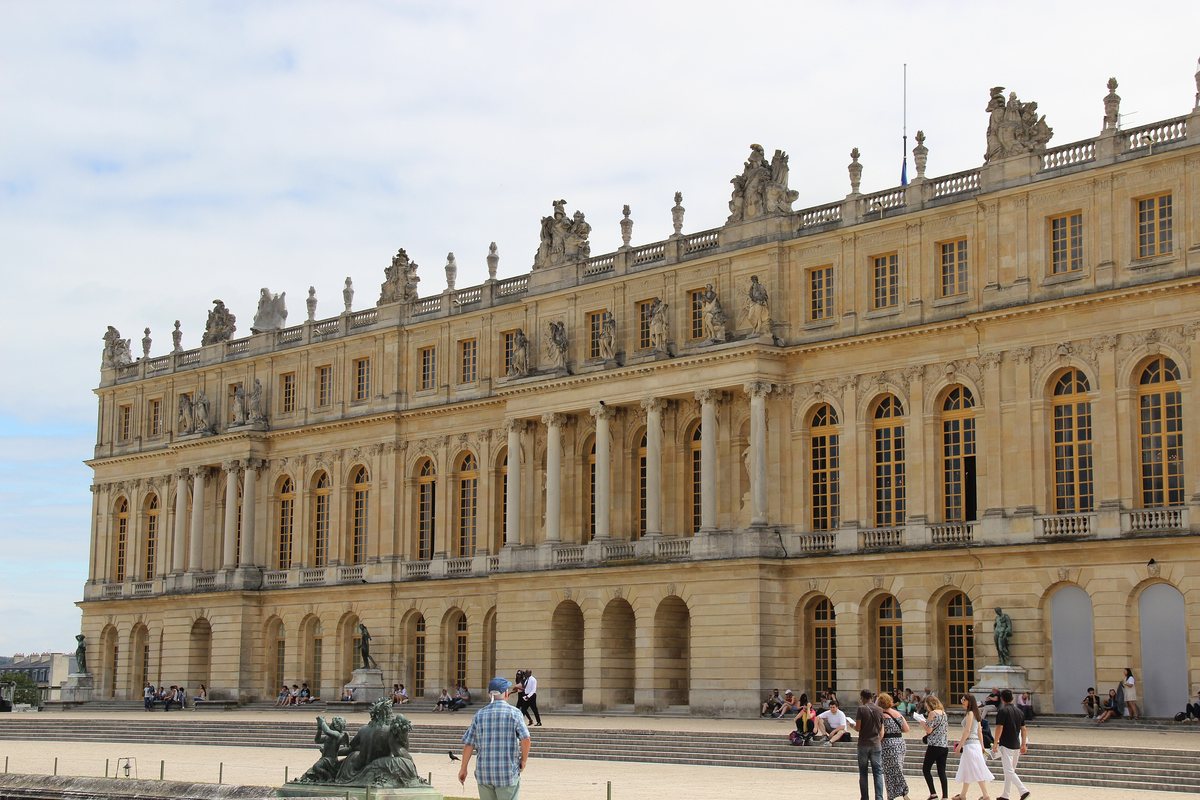
With children it is worth setting aside another day for Disneyland: how to get there and how much tickets cost.
A four-day route
| Day | What to do |
|---|---|
| 1 | The Eiffel Tower, the Champ de Mars, a boat on the Seine, in the evening — the view of the tower from the Trocadéro |
| 2 | The Louvre in the morning, the Tuileries, the Place de la Concorde, the Champs-Élysées, the Arc de Triomphe at sunset |
| 3 | Île de la Cité: Notre-Dame and Sainte-Chapelle; the Latin Quarter, the Luxembourg Gardens, in the evening — the Marais |
| 4 | Montmartre and Sacré-Cœur in the morning, the Musée d'Orsay in the afternoon |
| +1 | Versailles or Disneyland |
Where to stay: the arrondissements of Paris
Paris is divided into 20 arrondissements, whose numbers appear in addresses and on street signs. The lower the number, the closer to the center.
| District | Who it suits | What to consider |
|---|---|---|
| 1st–4th: the Louvre, the Marais, Île de la Cité | First trip, all the main sights on foot | The most expensive, small rooms |
| 5th–6th: the Latin Quarter, Saint-Germain | Cafés, bookshops, evening walks | Also not cheap |
| 7th: near the Eiffel Tower | Quiet, views of the tower | Little nightlife, expensive |
| 9th–10th: the Opéra, Gare du Nord and Gare de l'Est | Transport, trains, lower prices | Uncomfortable near the stations at night |
| 18th: Montmartre | Atmosphere, views, prices below the center | Hills and stairs, the metro to the center |
Getting in from the airport and getting around
- Charles de Gaulle is the main airport, about 25 km to the north. To the center — the RER B train, a taxi or a bus.
- Orly is about 13 km to the south. Since 2024 metro line 14 has run to the airport — straight to the center.
- Around the city — by metro: 16 lines, with stations every few hundred metres. It is easy to pay with a Navigo Easy card or through the official app; a separate fare applies to the airports.
- On foot — the center is compact: from the Louvre to Notre-Dame is about 20 minutes along the Seine.
What to try
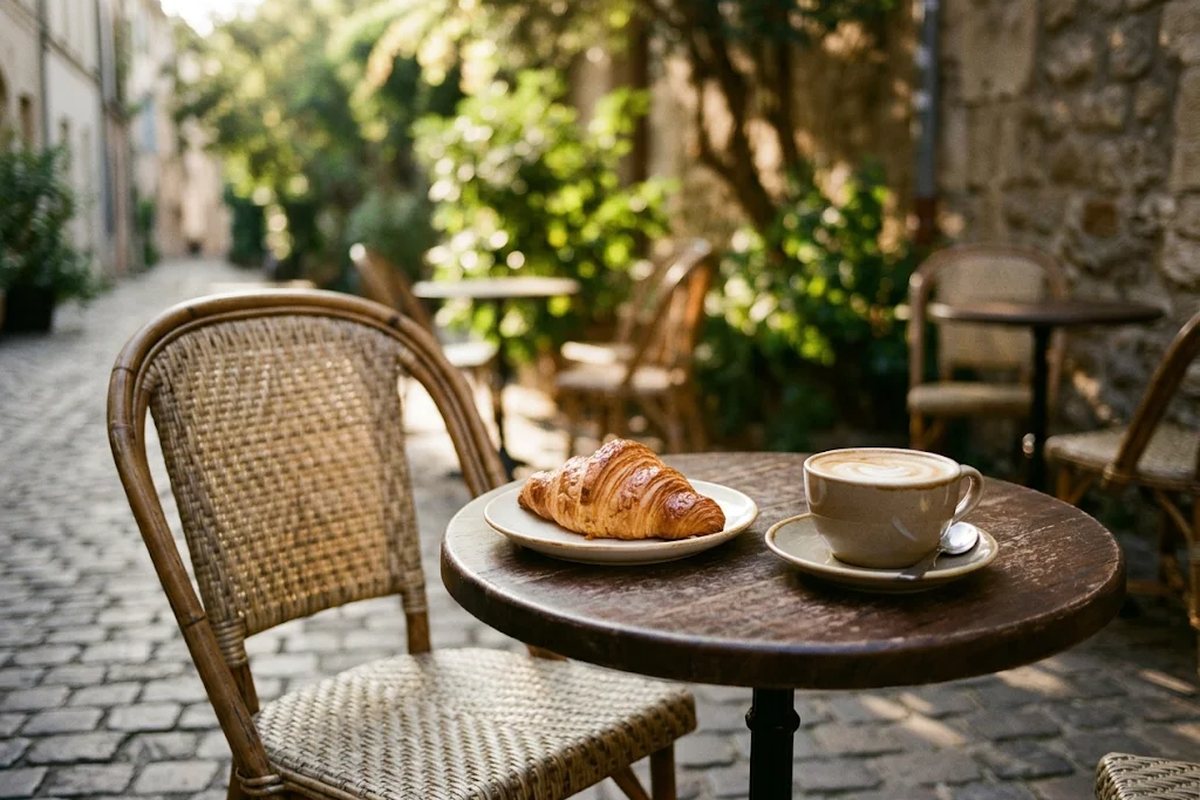
Croissants and baguettes from a bakery, cheeses, onion soup, duck leg confit, snails, street crêpes, macarons and éclairs. In a café you can ask for a carafe of tap water — it comes free, and the water in Paris is safe to drink.
 Created by AI
Good to know
- Tips. Service is included in the price by law. Leaving a little extra is up to you.
- Museums. The Louvre is closed on Tuesdays, the Musée d'Orsay and the Palace of Versailles on Mondays. If you plan many museums, look at the Paris Museum Pass for 2, 4 or 6 days — at the Louvre you still need to book a time slot with it.
- Pickpockets. On the metro and at the main sights keep your phone and wallet close.
- Sockets. 230 V; plugs from Kazakhstan and Russia fit without an adapter.
- Sunday. Many shops are closed or open only half the day; museums and restaurants are open.
Questions and answers
Do you need a visa for Paris?
France is in the Schengen Area. Citizens of Kazakhstan, Russia, Uzbekistan, Kyrgyzstan, Belarus, Armenia and Azerbaijan need a Schengen visa. It allows a stay of up to 90 days in any 180.
How many days do you need in Paris?
Four days to see the Eiffel Tower, the Louvre, Notre-Dame, Montmartre and the Musée d'Orsay without rushing. One more day for Versailles or Disneyland.
Which district of Paris is best to stay in?
On a first trip — the 1st to 6th arrondissements: near the Louvre, in the Marais, the Latin Quarter or Saint-Germain. Cheaper — near the Opéra or on Montmartre.
How do you get from Charles de Gaulle airport to the center?
By the RER B train, by taxi or by bus. From Orly the easiest option is metro line 14.
On which days are the museums closed?
The Louvre on Tuesdays, the Musée d'Orsay and the Palace of Versailles on Mondays.
When is the best time to go to Paris?
From April to June and from September to October. July and August are the busiest, and in December the city is decorated for Christmas.
The text, translation and images for this article were prepared with the help of artificial intelligence. AI can make mistakes — check important figures, dates and requirements against official sources.
Verified business hotels at closed corporate rates, with the invoice, act and e-invoice for your company — all in one account.
 Photo: Thomas Quine
16 November 2026Barcelona: What to See in Four Days
 Photo: Debashritaiitmandi
16 November 2026Rome: What to See in Four Days
 Photo: Diliff
18 November 2026Prague: What to Know Before You Go
 Photo: Alvesgaspar
16 November 2026Istanbul: What to See, Where to Stay and How to Get Around
 Photo: xiquinhosilva
16 November 2026Baku: What to See, Where to Stay and How to Enter
 Photo: Andrew Behesnilian
16 November 2026Yerevan: What to See in the City and Around
 Photo: Velatrix
17 November 2026Beijing: What to See in Four Days
 Photo: Basile Morin
17 November 2026Seoul: What to See in Four Days
 Photo: Bgag
17 November 2026Tashkent: What to See and How to Get There from Kazakhstan
 Photo: Ninara
17 November 2026Bishkek: What to See and How to Get There from Almaty
 Photo: Stefan Fussan
18 November 2026What to See in Shanghai
 Photo: Юрий Д.К.
18 November 2026What to See in Moscow
All articles
Business trips, documents and travel