


Prague: What to Know Before You Go
Weather by month and Christmas markets, entry rules, getting in from the airport and transport tickets, Prague Castle and the Old Town with prices, day trips and tricks to watch out for.
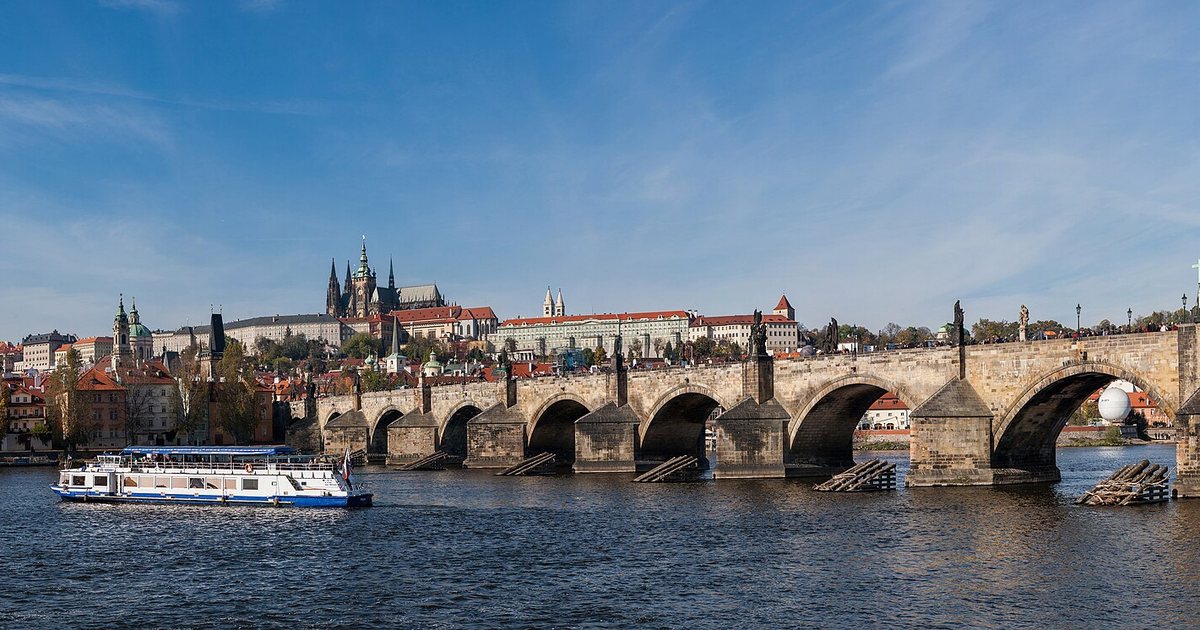
Prague is the capital of the Czech Republic, on the Vltava River. Prague Castle rises above the city, the 14th-century Charles Bridge crosses the river, and on Old Town Square a medieval astronomical clock comes to life every hour. The historic centre came through the Second World War almost undamaged and has been a UNESCO World Heritage Site since 1992. Below: when to go, who needs a visa, how to get in from the airport, what to see and what it costs, day trips, and the tricks to watch out for.
Entry rules, prices and timetables are taken from official sources as of November 18, 2026. Check them again before you travel.
When to go
Average weather in central Prague at the Clementinum weather station, 1991–2020:
| Months | Weather |
|---|---|
| April – June | +16 to +24 °C by day — the best time for walking |
| July – August | about +26 °C by day and the most tourists; summer brings thunderstorms |
| September – October | +14 to +20 °C by day, fewer tourists |
| November – March | +4 to +10 °C by day, around freezing at night, little sun |
Christmas. From November 28, 2026 to January 6, 2027, a Christmas market runs on Old Town Square, with another on Wenceslas Square. Prague Castle holds its Christmas Stroll from November 28 to January 3.
Visa and entry rules
- Schengen visa. The Czech Republic is in the Schengen Area. Citizens of Kazakhstan, Uzbekistan, Kyrgyzstan, Armenia and Azerbaijan need a Schengen visa. A short-stay visa allows up to 90 days in any 180-day period, counting all Schengen countries together.
- Where to apply in Kazakhstan. According to the Czech embassy in Astana, visa appointments are booked through the VFS Global visa centres in Astana and Almaty.
- Insurance. The visa requires medical insurance covering at least 30,000 euros for the whole trip.
- Citizens of Russia and Belarus. According to the Czech Ministry of Foreign Affairs, since 2022 the Czech Republic has accepted their visa applications only in specific cases, such as from spouses and children of EU citizens. Russian citizens holding a Schengen visa for tourism, sport or culture are not allowed into the country.
- The border. The EU Entry/Exit System (EES) operates at the Schengen border: on your first crossing your face is photographed and, as a rule, your fingerprints are scanned, and your passport is no longer stamped.
A Schengen visa is valid across the whole area, so Prague is easy to combine with Paris, Rome or Barcelona.
Flights and getting into the city
- From Astana — a direct SCAT flight on Tuesdays and Saturdays, about 5 hours 45 minutes (scheduled until March 27, 2027).
- From Almaty — Vietjet Air on Tuesdays and Saturdays: the plane flies from Hanoi to Prague with a stop in Almaty, and the Almaty–Prague leg takes about 7 hours 40 minutes.
- Václav Havel Airport is 12 kilometres west of the centre. The fastest option is trolleybus 59 to Nádraží Veleslavín metro station on line A: about 35 minutes to the centre on a regular 90-minute ticket for 50 CZK (about 2.3 dollars). Bus 100 goes to Zličín metro on line B, about 45 minutes. The Airport Express (AE) runs straight to the main railway station for 200 CZK (about 9 dollars). At night, buses 907 and 910 run.
- Taxis: book one through an app — Uber, Bolt or Liftago — so the price is shown in advance. Do not go with touts in the arrivals hall.
- Time. Prague is 4 hours behind Kazakhstan in winter and 3 hours behind in summer; it is 2 hours behind Moscow in winter and 1 hour in summer.
Getting around the city
Prague has three metro lines, plus trams and buses that share the same tickets. Prices are from pid.cz, the official Prague public transport website:
| Ticket | Paper | In the PID Lítačka app |
|---|---|---|
| 30 minutes | 39 CZK | 36 CZK |
| 90 minutes | 50 CZK | 46 CZK |
| 24 hours | 150 CZK | 140 CZK |
| 72 hours | 350 CZK | 340 CZK |
- A paper ticket is validated once — when you enter the metro or board your first tram. A ticket bought in the app becomes valid one minute after purchase, so buy it in advance.
- Children under 15 and people over 65 travel free.
- At night, trams and buses with numbers starting with 9 run.
Prague Castle and Malá Strana
- Prague Castle is, according to Guinness World Records, the largest ancient castle in the world: almost 70,000 square metres and about 570 metres long. Founded in the 9th century, it was home to the Czech kings, and today the president works here. The grounds are open daily from 6:00 to 22:00 and the historic buildings from 9:00 to 17:00.
- A 450 CZK ticket (about 20 dollars) covers St Vitus Cathedral, the Old Royal Palace, St George’s Basilica and Golden Lane with Daliborka Tower. It is valid for two days, and you can enter each building once.
- St Vitus Cathedral took almost 600 years to build — from 1344 to 1929. Behind a door with seven locks it keeps the Czech crown jewels.
- The changing of the guard takes place every hour from 9:00 to 18:00 at the castle gates, and the ceremonial one, with fanfares, at noon in the First Courtyard.
- Malá Strana is the old district between the castle and the Vltava; from Charles Bridge you walk up through it to the castle.
- Petřín is a hill with gardens and an 1891 lookout tower that resembles the Eiffel Tower. The funicular up the hill has been running again since September 22, 2026, after a two-year reconstruction: daily from 7:00 to 22:15, every 10 minutes. A single ride costs 100 CZK, but 24- and 72-hour passes are also valid. The lower station is by the Újezd tram stop.
Charles Bridge and the Old Town
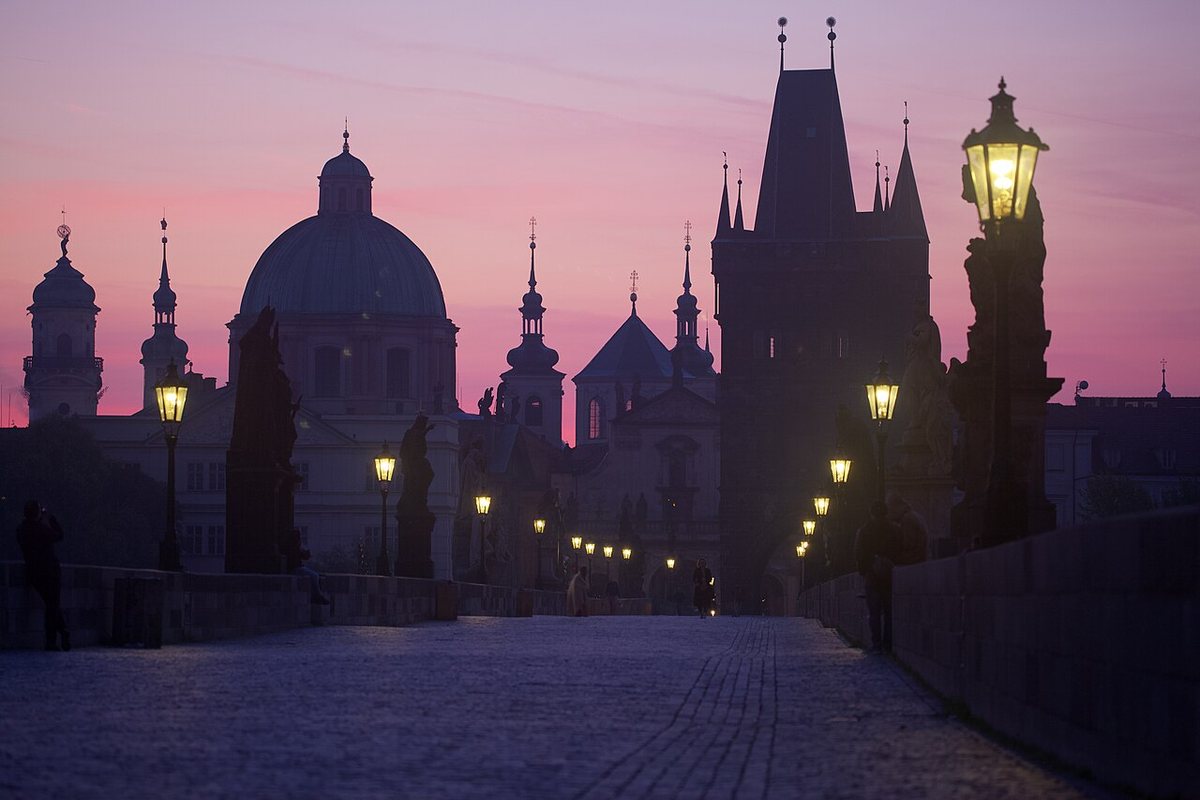
- Charles Bridge was begun in 1357 under King Charles IV. It is 516 metres long, guarded by three bridge towers and lined with 30 statues — all of them now copies. The bridge is crowded during the day, so come at sunrise.
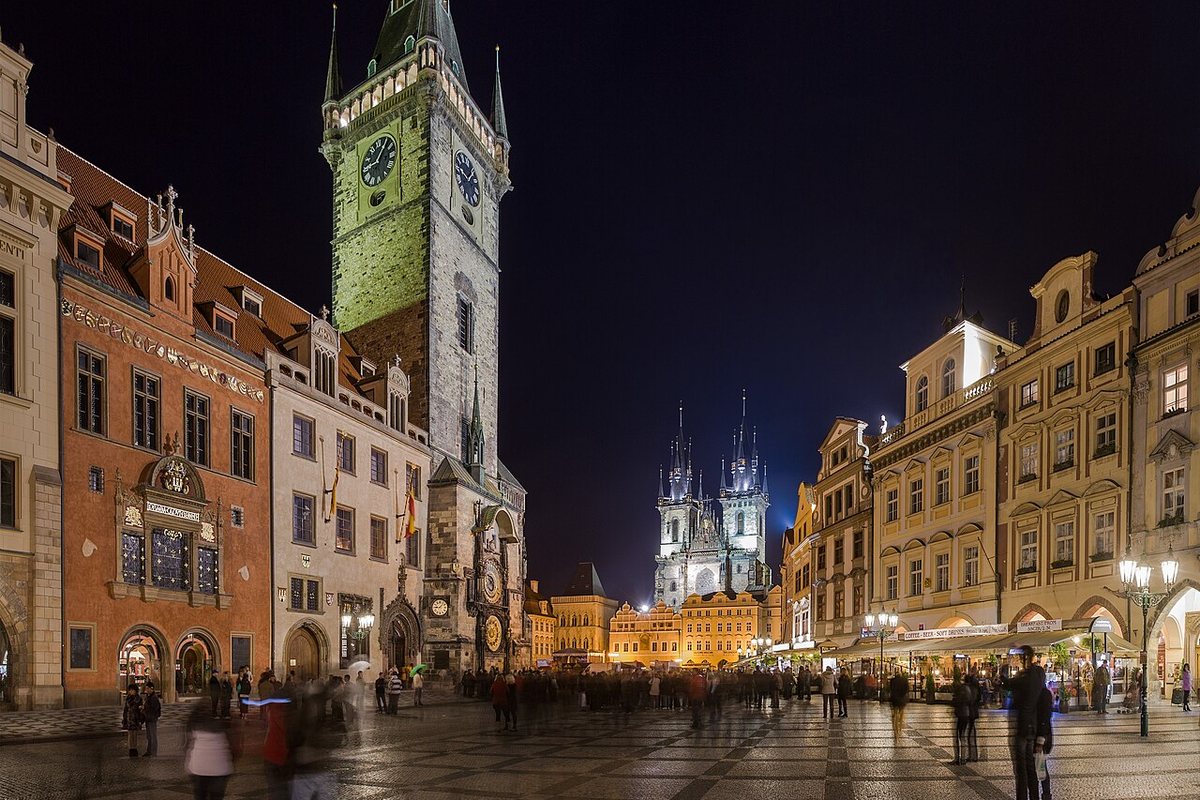
- Old Town Square has been the main square of the Old Town since the 10th century. Here stand the twin-towered Týn Church and the Old Town Hall.
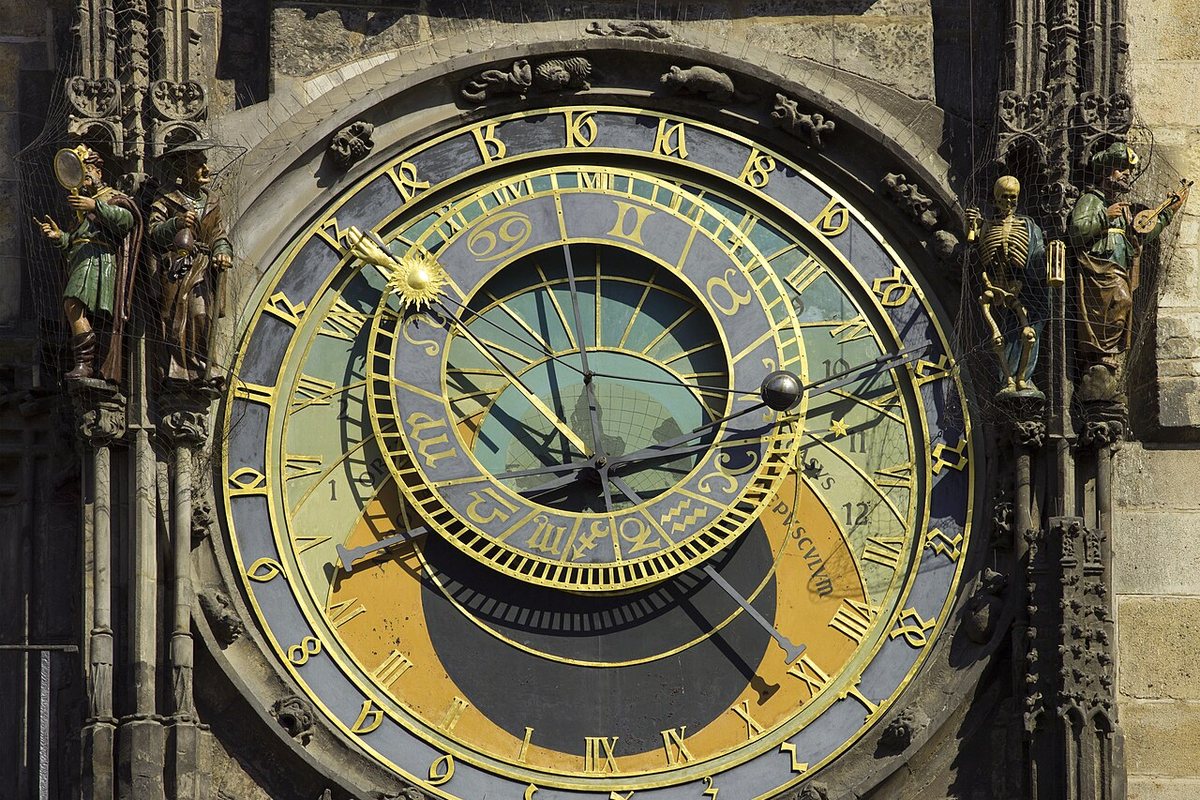
- The Orloj is the astronomical clock on the town hall tower, made in 1410. Every hour from 8:00 to 23:00, the twelve apostles pass by in the windows above the dial.
- The Old Town Hall was founded in 1338. A ticket to the town hall and its tower costs 350 CZK (about 16 dollars), with 50 % off in the first hour after opening. It is open from 10:00 to 19:00 from January to March and from 9:00 to 20:00 from April to December.
- Josefov is the former Jewish Quarter. Six synagogues, the Old Jewish Cemetery and the Jewish Town Hall have survived; today they are part of the Jewish Museum.
- Vyšehrad is a fort on the bank of the Vltava three kilometres south-east of the castle, probably founded in the 10th century. It has the Basilica of St Peter and St Paul, the 11th-century Rotunda of St Martin — the oldest in Prague — and a cemetery where the composers Dvořák and Smetana, the writer Karel Čapek and the artist Alphonse Mucha are buried.
Day trips
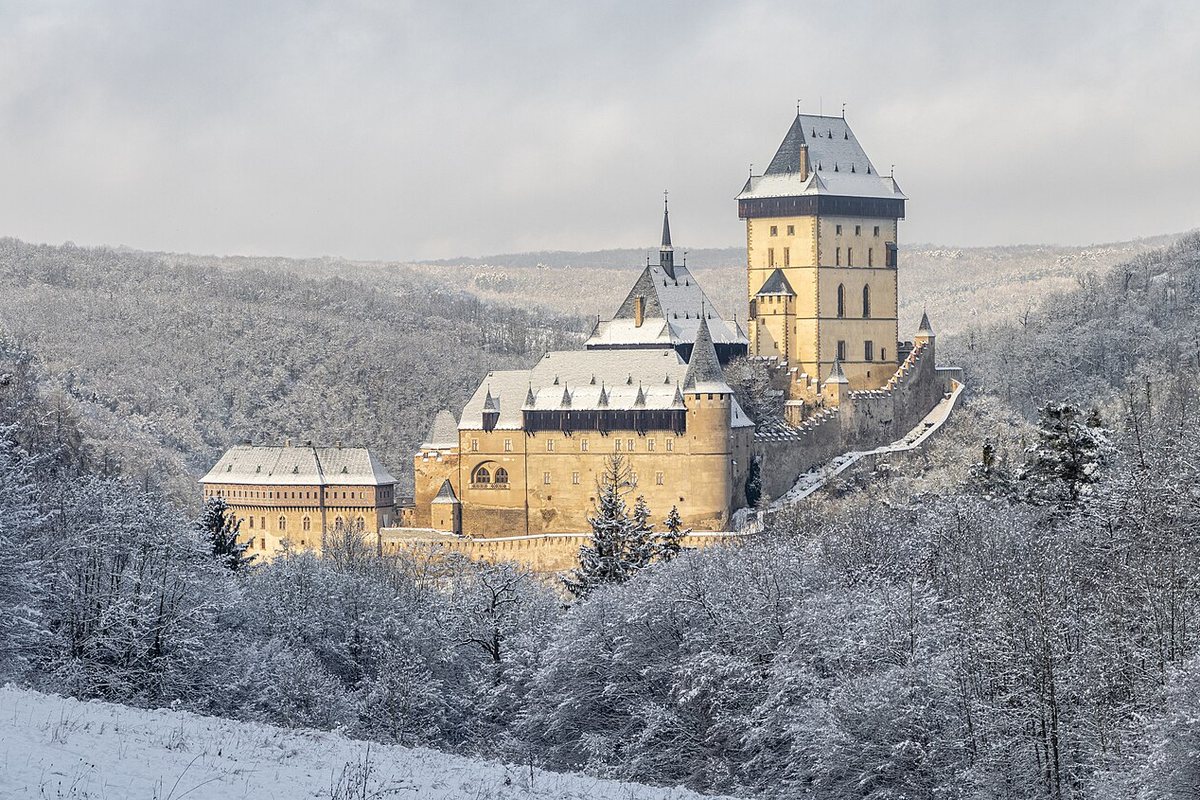
- Karlštejn is a Gothic castle founded by Charles IV in 1348, where the imperial regalia and the Czech crown jewels were kept. It lies 30 kilometres south-west, and the S7 suburban train leaves the main station about every half hour.
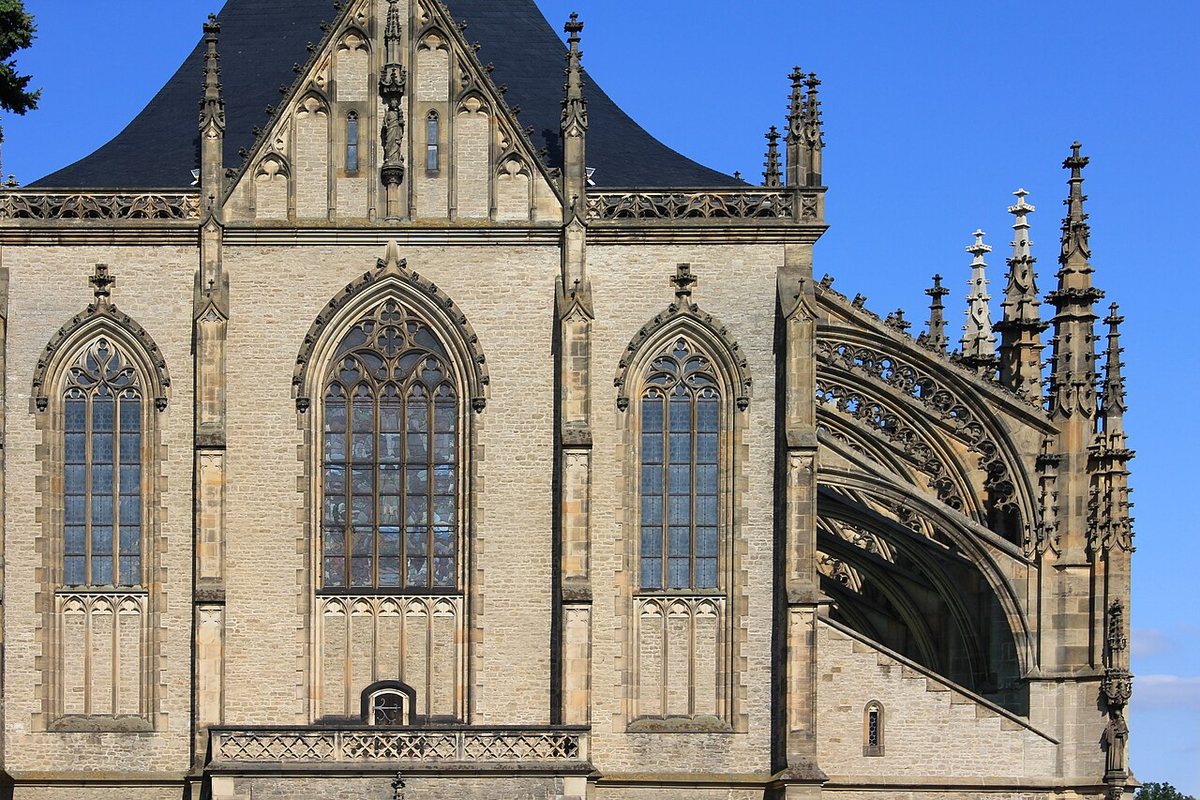
- Kutná Hora, 52 kilometres east, is a silver-mining town with the Church of St Barbara. Its centre, together with Sedlec Abbey and the ossuary, has been a UNESCO site since 1995. The train takes about an hour.
- Český Krumlov, 134 kilometres south, is a small town with a castle on the Vltava and a UNESCO site since 1992. It is about three hours by bus, so it is best to stay the night.
What to try
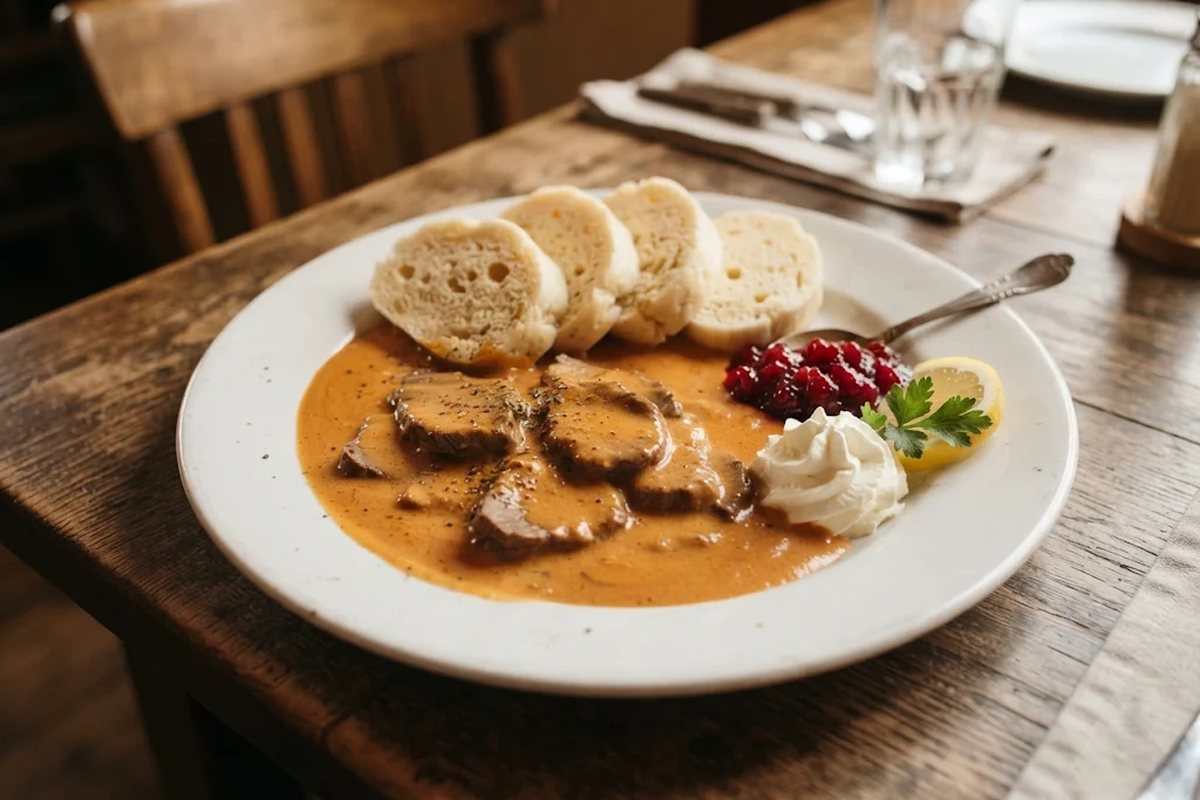
- Svíčková — beef in a creamy sauce of carrot, parsley root, celeriac and onion, served with bread dumplings.
- Smažený sýr — a slice of cheese about a centimetre thick, breaded and fried like a schnitzel. It comes with tartar sauce and potatoes.
- Chlebíčky — small open sandwiches with ham, egg, salads and fresh vegetables.
- Trdelník — the pastry tube sold in the centre as an "old Czech" treat is really more of a Slovak or Moravian dish, and it has only been sold widely in Prague since the 2000s.
 Created by AI
 Created by AI
 Created by AI
How not to fall for tricks
- Changing money. Do not change money on the street or at the airport. Before exchanging, ask how many koruna you will actually receive. If the exchange turns out to be a bad deal, the law lets you cancel it within three hours without giving a reason.
- Paying by card. If an ATM or card terminal offers to convert the amount into your home currency, decline and choose koruna: your own bank will then apply its rate, which is usually better.
- Taxis. Overcharging is most common on rides from the station and the airport and around Old Town Square. Use the apps.
- Pickpockets work on Charles Bridge, Wenceslas Square and Old Town Square, near metro stations and on crowded trams. Keep your wallet in an inside pocket and your backpack closed.
- Fake inspectors. A real ticket inspector must show a badge straight away. If there is no badge and you are asked to pay a "fine", call the police.
- Trams in Prague always have right of way — even at pedestrian crossings.
- The emergency number is 112; operators also answer in English and Russian.
Money
- Currency — the Czech koruna (CZK), not the euro. At the National Bank of Kazakhstan rate on November 18, 2026, a dollar cost about 22.2 koruna and a euro about 24.4 koruna; 100 CZK is about 4.5 dollars.
- Cards are accepted almost everywhere — in shops, hotels and most places that tourists visit.
Questions and answers
Do I need a visa for Prague?
Yes, if citizens of your country need a Schengen visa — for example, citizens of Kazakhstan, Uzbekistan and Kyrgyzstan. The Czech Republic issues visas to Russian citizens only in specific cases and does not admit them on Schengen tourist visas.
When is the best time to visit Prague?
From April to June and in September and October, with daytime temperatures of +14 to +24 °C. In winter it is about +4 °C by day, but Christmas markets run from November 28 to January 6.
How much does Prague Castle cost?
The main ticket is 450 CZK (about 20 dollars) and covers St Vitus Cathedral, the Old Royal Palace, St George’s Basilica and Golden Lane. It is valid for two days.
How do I get from Prague airport to the city centre?
Take trolleybus 59 to Nádraží Veleslavín metro station and continue on line A: about 35 minutes on a 90-minute ticket for 50 CZK. The Airport Express to the main railway station costs 200 CZK.
Are there direct flights to Prague from Kazakhstan?
Yes: SCAT flies from Astana and Vietjet Air from Almaty, both on Tuesdays and Saturdays. The flight takes about 5 hours 45 minutes from Astana and about 7 hours 40 minutes from Almaty.
When is the Christmas market in Prague?
On Old Town Square, from November 28, 2026 to January 6, 2027.
Where can I go on a day trip from Prague?
To Karlštejn Castle, 30 kilometres away by suburban train, or to Kutná Hora with the Church of St Barbara, about an hour by train. Český Krumlov is further, about three hours by bus, so it is best to stay overnight.
The text, translation and images for this article were prepared with the help of artificial intelligence. AI can make mistakes — check important figures, dates and requirements against official sources.
Verified business hotels at closed corporate rates, with the invoice, act and e-invoice for your company — all in one account.
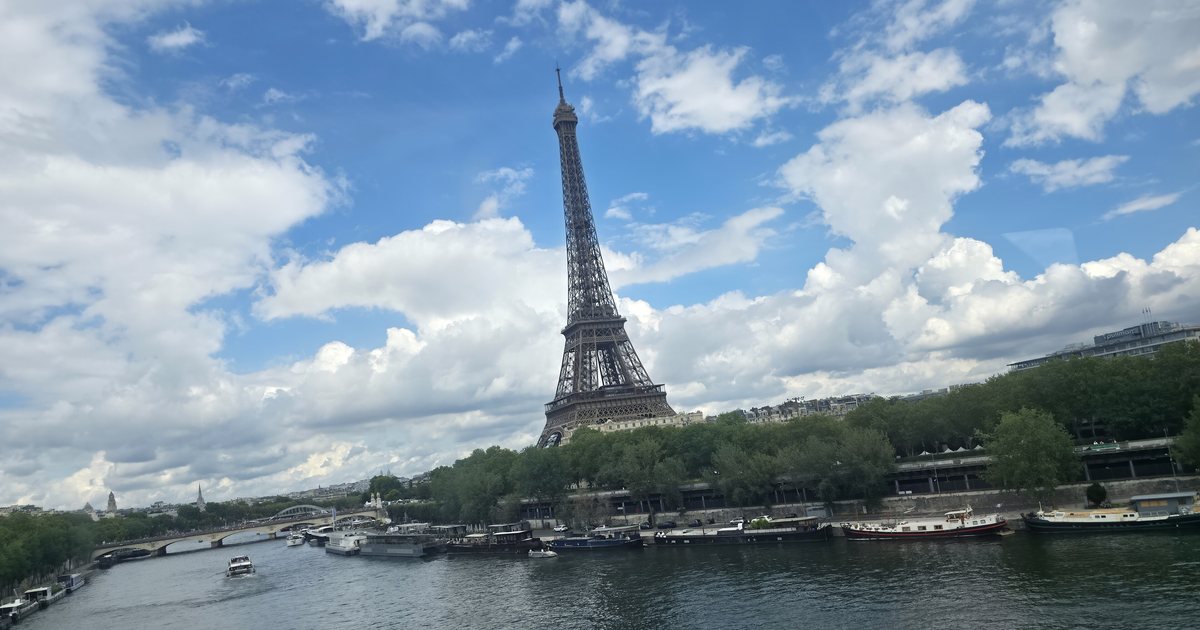 Photo: Struppig taucher
16 November 2026Paris: What to See in Four Days
 Photo: Thomas Quine
16 November 2026Barcelona: What to See in Four Days
 Photo: Debashritaiitmandi
16 November 2026Rome: What to See in Four Days
 Photo: Ninara / TSP
18 November 2026Bangkok: What to Know Before You Go
 Photo: Sosotedrd
18 November 2026Batumi: What to Know Before You Go
 Photo: Ninara
17 November 2026Bishkek: What to See and How to Get There from Almaty
 Photo: Serhio Magpie
18 November 2026Holidays in Egypt: Sharm El Sheikh or Hurghada
 Photo: Hoàng Thạch
18 November 2026Nha Trang: What to Know Before You Go
 Photo: xiquinhosilva
16 November 2026Baku: What to See, Where to Stay and How to Enter
 Photo: Stefan Fussan
18 November 2026What to See in Shanghai
 Photo: Basile Morin
17 November 2026Seoul: What to See in Four Days
 Photo: Trantuonglam
17 November 2026A Holiday in Vietnam: Where to Go, the Visa and the Season by Month
All articles
Business trips, documents and travel