


How to Fill a Hotel in the Off-Season: 10 Ways to Raise Occupancy
Tourists leave, but demand doesn't disappear — the guest changes. Where to find guests in the low season and how to sell rooms so occupancy doesn't drop.
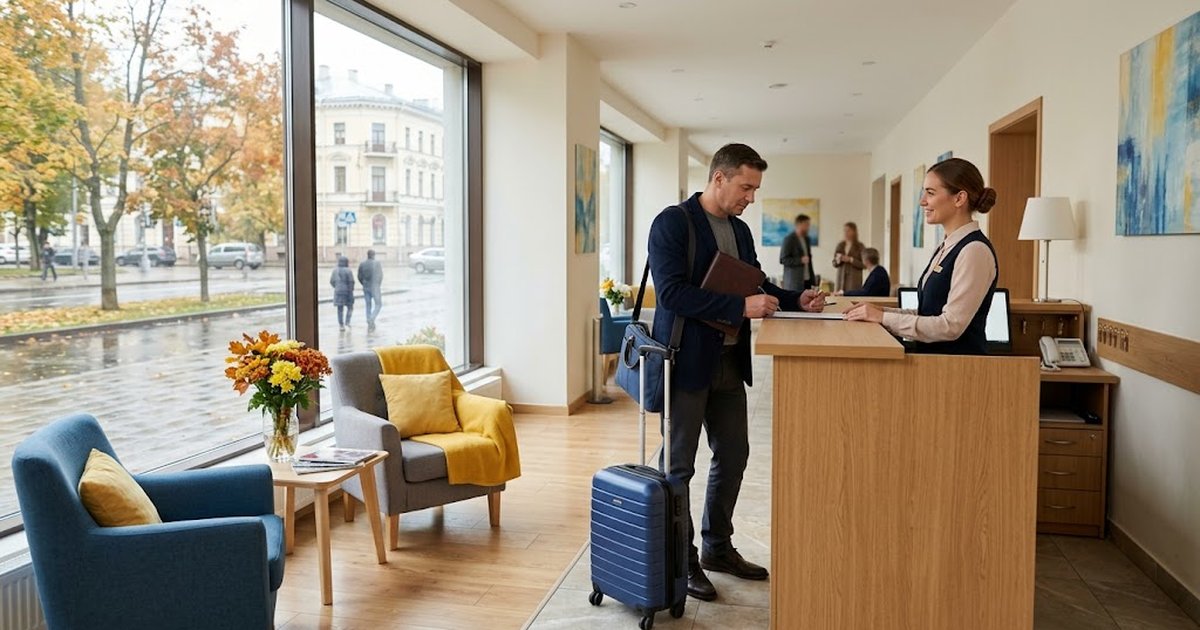
The off-season hits all hotels equally: tourists leave, but the rooms and the salaries stay. But demand in the low season doesn't disappear entirely — the guest changes. Business travelers, crews on construction sites, event participants and city residents book all year round. Let's look at how to find them and how to sell rooms so that occupancy doesn't collapse.
First, calculate when rooms sit empty
Open last year's room calendar and note occupancy by month and separately by day of the week. Often it turns out that a "bad season" is not the whole month, but weekdays from Monday to Thursday or specific weeks between holidays. For each dip, there is a specific guest to find.
Occupancy is the rooms-nights sold divided by the rooms-nights available. We covered how to calculate it together with ADR and RevPAR in the article "RevPAR, ADR and Hotel Occupancy", and you can plug the numbers into the RevPAR calculator.
1. Business travelers and companies
Business trips don't depend on the tourist season: employees travel to sites, inspections, negotiations and training from Monday to Thursday, all year round. These are exactly the nights when there are no holidaymakers.
What matters to companies:
- an invoice, an act and an ESF (electronic tax invoice) for the legal entity — without reminders and redoing;
- early breakfast or breakfast to go, a work desk, stable Wi-Fi, parking;
- a clear price for the whole period and the option to extend the stay;
- a quick response to a request — the travel manager books several employees at once.
Where to find such guests: direct contracts with companies in your city and district (construction, industry, service and trading companies), a corporate rate, and business travel platforms. How to work with legal entities without errors in documents is covered in the article "How a Hotel Should Work with Legal Entities", and how to calculate a corporate price is in "Corporate Rate: How to Calculate It".
2. Long-term stays
Site specialists, shift workers and employees on probation live for weeks. Weekly and monthly rates work for them: a lower price per night, but the room is sold for the entire period. To keep such a guest, think through the daily life: a fridge and kettle in the room, access to a washing machine, cleaning on a schedule rather than every day.
3. City events
Draw up a calendar of events for the year: conferences and exhibitions, sports competitions, concerts, entrance exams, admissions at regional medical centers, fairs. Open sales for these dates in advance and offer organizers a block of rooms — it's easier for them to negotiate with one hotel than to accommodate participants one by one.
4. City residents for the weekend
In the low season you have your own audience — the residents of your city. They are interested in weekend packages: a room with a late check-out, dinner, a sauna or a pool, if you have them. Such offers sell well through social media and map cards.
5. Packages instead of discounts
Lowering the price quickly teaches guests to wait for a discount. Added value works more carefully: breakfast included, late check-out until 14:00, free parking, a transfer from the train station. The guest gets more for the same price, and your base rate doesn't fall.
6. Prices and sales rules
- Different prices on weekdays and weekends. One price for the whole week leaves money on the table on peak days and scares guests away on slow ones.
- Early booking. A lower price for booking in advance helps you see occupancy a month ahead.
- Minimum stay on weekends and holidays — so you don't sell one night out of three.
- Non-refundable rate — cheaper, but without free cancellation. Spell out the cancellation terms in the accommodation agreement.
7. More sales channels
If almost all bookings come from one source, its decline becomes your decline. Add channels that bring a different guest: a corporate channel, booking platforms, direct sales through your website and WhatsApp. Details are in the articles "Hotel Sales Channels" and "Aggregators for Hotels in Kazakhstan". To avoid selling a room twice across several channels, you need one room calendar.
8. Cards in 2GIS and Google Maps
Business travelers and city residents often search for a hotel directly in maps. Up-to-date photos, "from" prices, a phone number and WhatsApp, reception hours and replies to reviews are a free way to get calls in any season. How to respond to reviews is covered in the article "How to Respond to Guest Reviews".
9. Past guests
Those who have already stayed with you book more willingly than new ones. Offer them special terms for the low season. You may write only to those who have consented to personal data processing and to receiving messages — without consent, a mailing violates the personal data law.
10. Use the pause
Part of the low season will still be quiet. This is the time for room renovations, a deep clean, training administrators and updating photos — so the hotel enters the high season in its best shape. Checklists for reception and housekeeping are in the articles on the hotel administrator and housekeeping.
How it works on Rentus
Rentus is our service for business travel across Kazakhstan. Only companies book on it, so guests arrive on weekdays and outside the season. The hotel receives a booking in a free account with a room calendar, and the invoice and act for the company are assembled in one click. The commission is 10% only for a completed stay, and the first 5 bookings are commission-free under the promotion rules. The weekday occupancy calculator will show how much this adds to revenue. Create a hotel account.
Questions and answers
How can I raise hotel occupancy on weekdays?
On weekdays, business travelers are your main guests: sign direct agreements with companies in your city, set up a corporate rate, and connect to business travel platforms. It's important to issue invoices, acts, and ESF electronic invoices to legal entities quickly.
What works better in the low season: a discount or a package?
Usually a package: breakfast, late check-out, or parking at the same price. Discounts teach guests to wait for price cuts, while a package protects the base rate.
Can I send emails to past guests?
Yes, but only to those who have consented to the processing of their personal data and to receiving messages. Without consent, mailing violates the personal data law.
How much does it cost to join Rentus?
The dashboard with the availability grid is free. The commission is 10% of the cost of completed stays only, and the first 5 completed bookings are commission-free under the promotion's terms.
The text, translation and images for this article were prepared with the help of artificial intelligence. AI can make mistakes — check important figures, dates and requirements against official sources.
Companies book their employees' business trips on Rentus and pay by invoice. Joining is free; commission is charged only for completed stays.
 Photo generated by AI
12 October 2026Hotel Front Desk Scripts: Calls, WhatsApp and Message Templates
 Photo generated by AI
12 October 2026RevPAR, ADR and Hotel Occupancy: How to Calculate Them and What They Show
 Photo generated by AI
12 October 2026How to Reply to Guest Reviews on 2GIS and Google Maps: Rules and Templates
 Photo generated by AI
12 October 2026Hotel Sales Channels: How Not to Depend on a Single Aggregator
 Photo generated by AI
12 October 2026Where to List Your Hotel in Kazakhstan: Aggregators and Their Terms in 2026
 Photo generated by AI
10 October 2026Hotel Overbooking: Why a Room Gets Sold Twice and How to Prevent It
 Photo generated by AI
10 October 2026How to Open a Hotel in Kazakhstan: A Step-by-Step Plan for the Hospitality Business
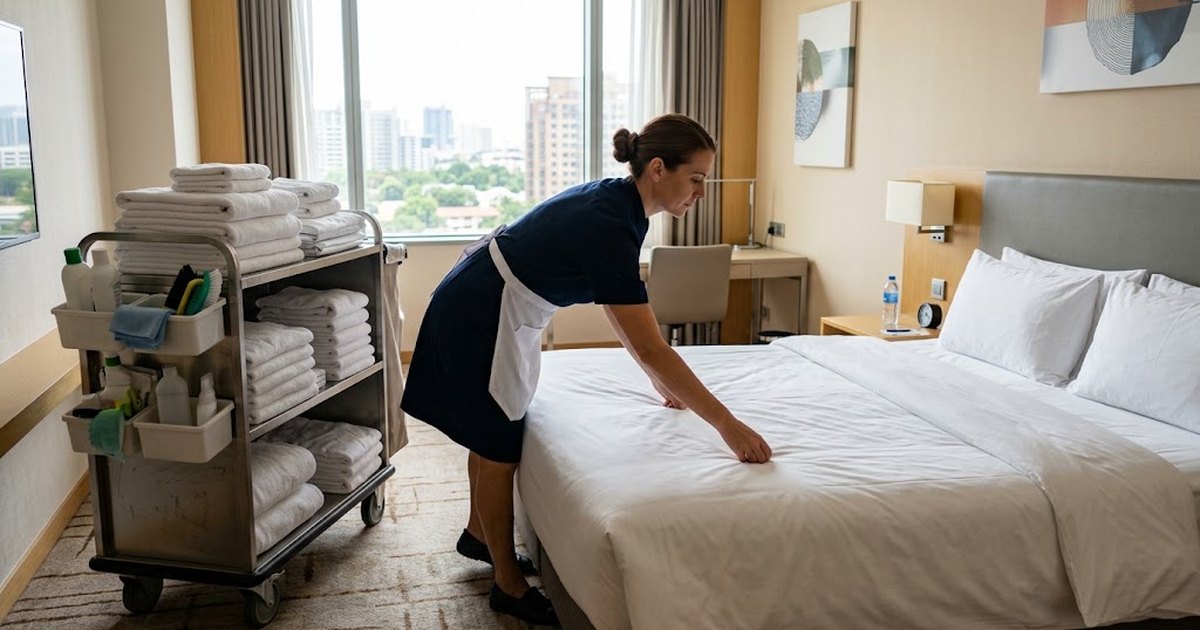 Photo generated by AI
10 October 2026Housekeeping in a Hotel: Types of Cleaning, Room Statuses, and the Housekeeper's Cart
 Photo generated by AI
10 October 2026Accommodation Contract with a Legal Entity: What to Specify in the Hotel Contract
 Photo generated by AI
10 October 2026Aparthotel: What It Is, How It Differs from a Hotel, and How to Run One in Kazakhstan
 Photo generated by AI
10 October 2026Hotel Receptionist: Duties, Shift Checklist and Key Skills
 Photo generated by AI
6 October 2026Tourist Tax in Kazakhstan in 2026: 0% Rate and What Hotels Need to Know
All articles
Occupancy, companies and documents for hotels